
Judges blown away by Melbourne students' energy generator design
Faculty of Engineering and IT, University of Melbourne

A University of Melbourne student team has been awarded a first prize at an international floating wind energy competition for an innovative design, first tested at Melbourne’s Elwood Beach.
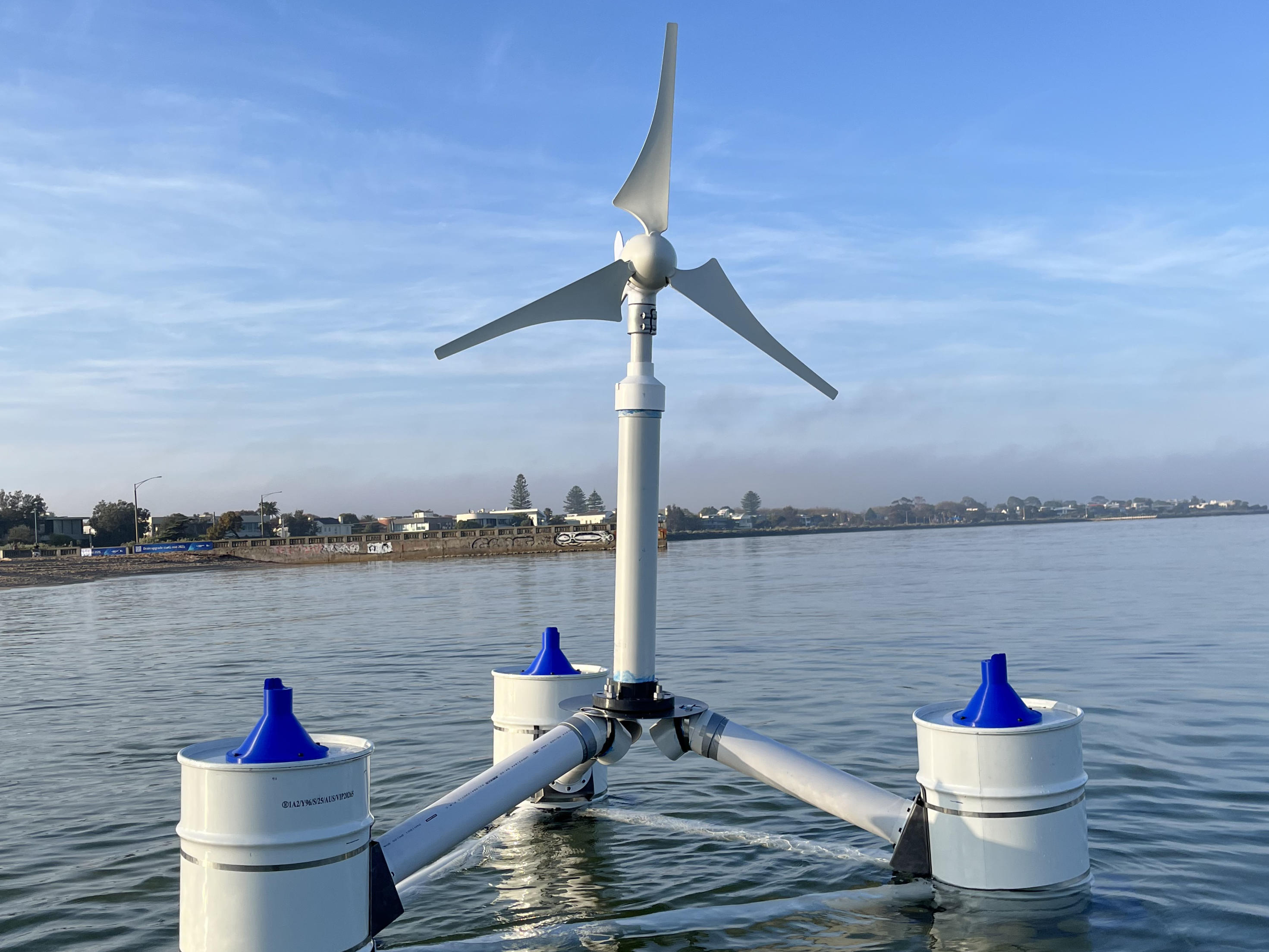
The team packed up their clever design and transported it to France for the international Floating Wind Challenge, held in France. They were the first team from the southern hemisphere to participate in the competition, which aims to stimulate and inspire the next generation of offshore wind pioneers.
Teams designed and built a floating offshore support structure for a 500W Vevor wind turbine. Over three days, the six students in the University’s ‘Southerly Winds’ team presented and installed their structure offshore, taking out first place in the ‘Report’ category and third in the ‘Structure’ category.
The group designed and built the structure over 12 months, testing it at Elwood Beach.
Team co-leader Olivia Perkins attributed their win, in part, to a clever twist on a familiar idea.
"As waves rose and fell inside the oscillating water columns, they pushed air through a second turbine — an attempt to add extra power to the system," Olivia explained. "Perforated hexagonal heave plates were connected to reduce whirlpools that cause instability and tension leg moorings secured the structure to a hybrid anchor through a swivel connection.
"Building an offshore wind farm is a huge financial cost, so we wanted to design in extra renewable power to make it more commercially attractive."
Co-leader Nick Kluckow said getting the structure to France was the hardest part. “We had to fit it into four, cabin-sized duffel bags and design it to come apart, while remaining structurally sound and watertight,” he said.
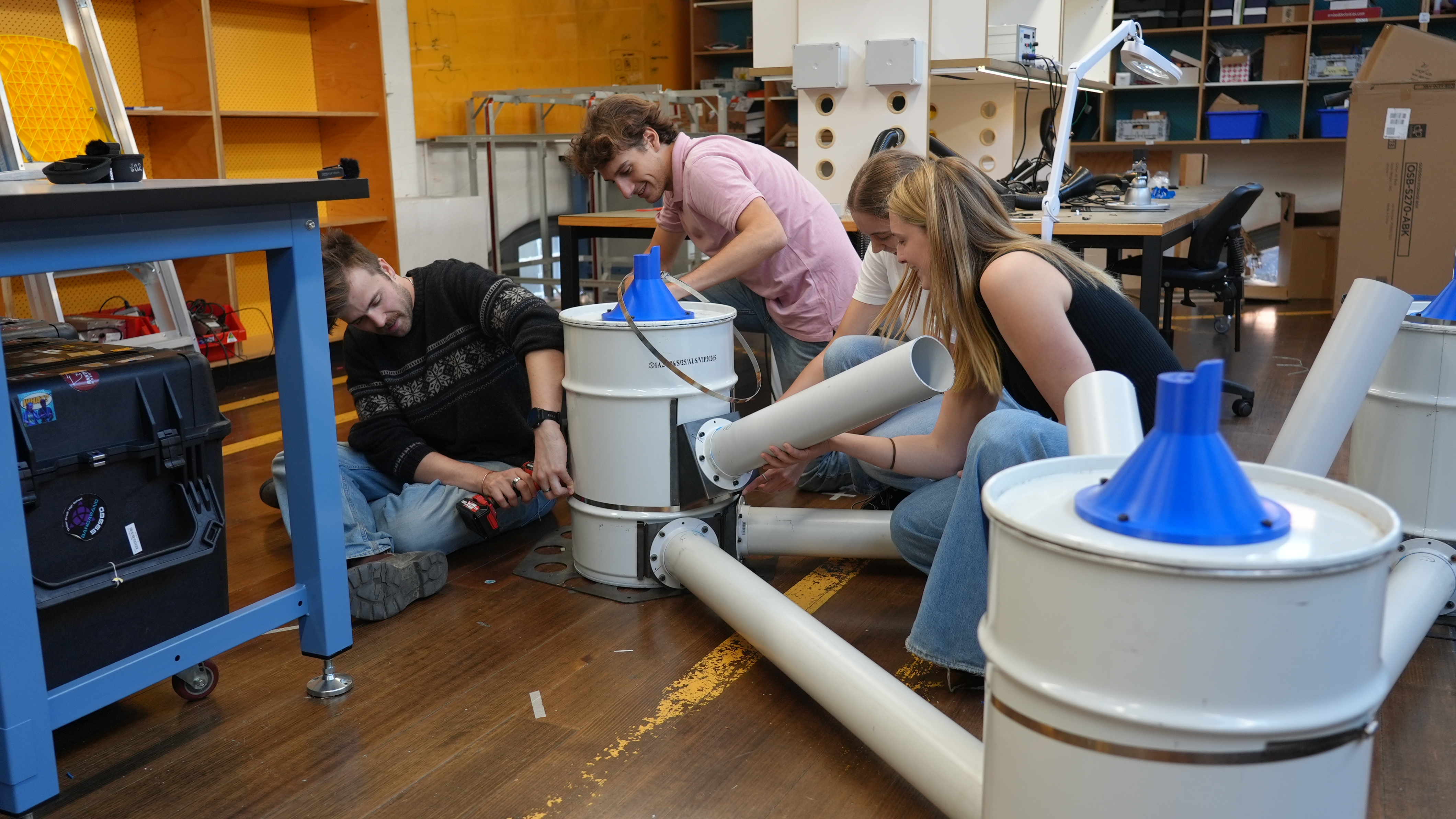
The project was undertaken through the University’s Students in Renewable Energy (SiRE) club, which seeks to raise awareness of offshore wind and give students hands-on, clean energy skills before they graduate. The student-led, not-for-profit group is backed by the Faculty of Engineering and Information Technology, the Melbourne Energy Institute and the Australian Centre for Offshore Wind Energy.
University of Melbourne Associate Professor Shiaohuey Chow, who was an academic champion for the team, said their combination of wind and wave energy was a standout. “This was an opportunity to gain expertise that may help build Australia’s future offshore wind industry,” Associate Professor Chow said.
Olivia said meeting other teams and jury members, and the engineers and environmentalists who shared the team’s passion was invaluable. “On the beach in France, we could see three working floating wind turbines generating power out at sea. This was a glimpse of the future,” she said.
Besides Olivia and Nick, the team included Tess Tregear, Miles Cowton, Sandy Chen, Rishwanth Darun and Ning Wan. Five are completing Master’s level studies in Mechanical Engineering, Civil Engineering or Mechatronics, while Mr Darun is studying a joint PhD in Philosophy and Marine Science. Several undergraduates also worked on the project in Melbourne.
Their prize was 1,000 euros (≈AUD$1,600) for innovative design to cover material costs — and secured corporate sponsorship from Grid-Link and Palisade Integrated Management Services.
Contact details:
For interviews, or image and video asset library, contact Lily Petrovich
[email protected] | +61 0405 406 900


