
One Nation super policy could hand Australians a $190bn tax slug
Super Members Council
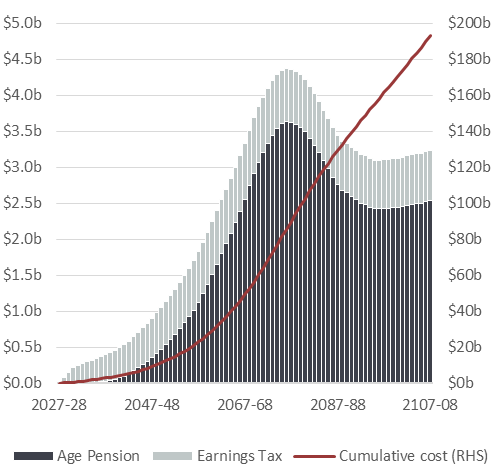
One Nation’s bid to turn super into an ATM won’t just fuel inflation and make Australians poorer – it could also leave taxpayers on the hook for a long-term bill of $190 billion (in today’s dollars).
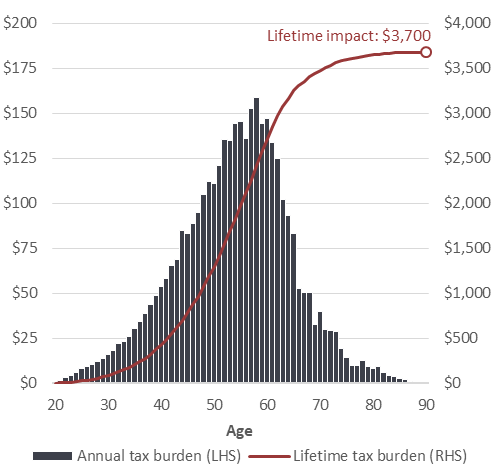
New modelling by the Super Members Council shows today’s 20-year-olds would each have to pay an additional $3,700 in income tax over their lifetime if the policy became law, mostly due to paying higher Age Pension costs for people who withdrew their retirement savings (see Figure 1 below).
“Australians are facing real cost of living and housing pressures but damaging everyone’s retirement savings and driving up inflation further through early super withdrawals would just make those pressures worse.”
“Your super is not designed to be an ATM or to solve politicians’ policy problems. A policy like that won’t just make you much poorer in retirement - it will also hand you, your kids, and your grandkids a bigger tax bill to pay more in pensions if other people take their super out early,” said the Council’s CEO Misha Schubert.
“That higher bill to taxpayers will also make it harder to fund the essential services that battling Australians rely on - hospitals, medicines, schools, roads, and emergency drought and flood relief.”
The modelling shows the impact on the budget in higher Age Pension costs and lower super tax receipts would peak at almost $4.5 billion a year over the long-term.
Currently, Australia is on track to have the lowest pension spending in the OECD as spending on the Age Pension is projected to fall from 2.3% of GDP today to just 1.8% by 2066.
But that trend could be reversed if the policy ever became law.
"Many other countries are struggling under the weight of rising pension costs as their populations age. Australia's super system is the reason we've avoided that fate. Any proposal to weaken the safeguards on super risk higher taxes to fund a much bigger age pension bill."
Previously released modelling by the Council found a median full-time worker withdrawing a quarter of super contributions for 3 years would be $25,000 poorer (in today's dollars) by retirement ($110,000 poorer in future dollars).
A couple would be around $50,000 worse off in today's dollars - and $220,000 in future dollars (in nominal terms).
If it became permanent, the policy would wind back the Super Guarantee to 2013 when it was 9% – slashing people's super by up to $132,000 for an average worker by retirement.
It would also mean more of Australians' super would need to be shifted into short-term liquid investment options that generate lower returns, further weakening Australians' super.
The cost to taxpayers from One Nation’s policy would be more than double the cost of the Early Release of Super scheme during COVID, where research presented at an RBA workshop found withdrawals triggered a sharp spending response, including on gambling, alcohol and tobacco, furniture and food delivery.
Figure 1: Estimated long-term taxpayer cost of One Nation’s 3% super pay boost proposal
|
Aggregate cost |
Tax burden for individual aged 20 now |
|
|
|
Source: SMC analysis using the SPROUT model.
ENDS
About us:
The opinions above are those of the author in their capacity as spokesperson for Super Members Council of Australia (SMC). SMC, the authors and all other persons involved in the preparation of this information are thereby not giving legal, financial or professional advice for individual persons or organisations.
Contact details:
Mike Dolan, 0474 909 471, [email protected]