
Parasite myths leaving Australian dogs vulnerable this winter
Zoetis Australia

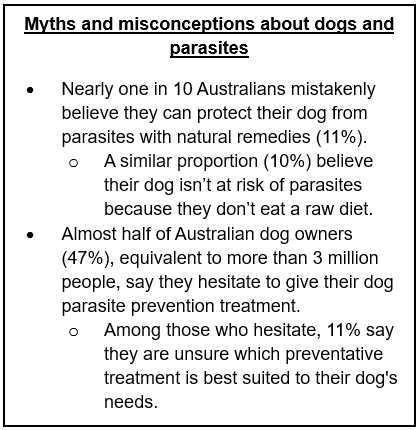
Sydney, Australia, Tuesday 21 July 2026: New research is challenging common parasite myths this winter by highlighting seasonal pet care behaviours that may be putting dogs at greater risk of exposure to parasites like heartworm, ticks, fleas, and intestinal worms. The findings reveal that more than half of Australian dog owners (52%) believe at least one myth about dog parasites, suggesting misinformation remains a significant barrier to routine parasite prevention.¹
As temperatures drop and daily routines shift indoors or go into hibernation, many Australian dog owners may be making the dangerous assumption that winter means lower risk of parasites.
For television presenter, model, expecting first time mum and proud dog mum Erin Holland, the issue is deeply personal. Her two-year-old Siberian Husky, Skylar, contracted parasites as a puppy, leaving Erin with a confronting understanding of how lasting the impacts on health can be.
"Like many others, Skylar’s routine can change in winter," says Erin. "But after her experience with parasites as a puppy, I’m very conscious of being consistent with her care. Parasites affected her digestive health in ways we still manage today. It was confronting to learn that a parasite infestation can have long-term consequences if left untreated.”
The findings point to a common misconception among dog owners – waiting until symptoms appear before taking action. Approximately 13% of Australian dog owners, or around 900,000 people, believe they only need to treat their dog for parasites if symptoms are visible.¹ However, many parasites can be present – and impact a pet’s health – long before any obvious signs appear, making it important for owners to keep their dog's parasite prevention up to date regardless of the season.
"Dogs can't tell us when they're feeling unwell, which is why I think it's so important for owners to take a proactive approach to their dog's health. For me, that means staying consistent with Skylar's parasite prevention all year round, not just when the weather is warmer or when the risk feels more obvious," says Erin.
Nearly half of Australian dog owners (47%) admit they hesitate to give their dog parasite treatment, with cost being called out as a key barrier.¹ While skipping or delaying treatment may lead to short-term savings, the cost of treating a parasite infestation can far outweigh the cost of routine prevention, especially as some parasites can lead to deadly health consequences. On average, Australian pet owners spend more than $287 each time their pet requires veterinary treatment for a parasite infestation, with costs in severe cases exceeding thousands of dollars.2
As Erin prepares to welcome her first child, she says protecting both Skylar and her growing family has become an even greater priority.
"When you take on the responsibility of a pet, they're part of the family, and their health and wellbeing become just as important as anyone else's," says Erin. "With the rising cost of living, every household is making decisions about where to spend their money. But after seeing the long-term impact parasites have had on Skylar's health, parasite prevention is something I wouldn't compromise on.”
“For me, the peace of mind comes from knowing Skylar’s risk is reduced simply by following a monthly prevention routine. The fact she thinks her Simparica Trio chew is a treat is a bonus.”
The research also highlights a myth that dog owners can control their pet's exposure to parasites, with one in four Australians (25%), equivalent to approximately 1.8 million people, believing this to be true.¹ Combined with more time spent indoors and changes to daily routines during winter, this misconception can create a false sense of security around parasite risks.
Veterinary experts warn that many parasites remain active year-round and can affect dogs both inside and outside the home, often before any obvious symptoms appear.
Dr Christopher Ng, Veterinary Operations Manager at Zoetis Australia, says the myth that parasite risk disappears during winter can leave dogs vulnerable to preventable health issues.
"Parasites remain a year-round risk, with dogs still exposed through backyards, on their daily walks, interactions with other animals, travel and in their local environment. Risk varies depending on factors such as geography, climate and lifestyle, which is why parasite prevention should be based on risk, not the season. In many cases, routine prevention with an all-in-one chew like Simparica Trio is far easier and more affordable than treating a preventable health issue later," says Dr Ng.
With winter now well underway across Australia, veterinary experts are encouraging dog owners to ensure protection remains consistent throughout the year.
If a dog is not on a regular parasite prevention program, owners are encouraged to consult their veterinarian to better understand the health risks and discuss suitable protection options. To help inform these conversations, dog owners can also access an online assessment tool that identifies potential parasite risks based on their location, lifestyle and exposure to other animals and people.
ENDS
This media release was distributed by Palin Communications on behalf of Zoetis Australia. For all media enquiries, please contact:
|
Anastasiia (Ana) Nazarenko Palin Communications 0435 977 559 | anastasiia@palin.com.au |
Jing Beh Palin Communications 0452 102 801 | [email protected] |
About Zoetis
As the world’s leading animal health company, Zoetis is driven by a singular purpose: to nurture our world and humankind by advancing care for animals. After innovating ways to predict, prevent, detect, and treat animal illness for more than 70 years, Zoetis continues to stand by those raising and caring for animals worldwide – from veterinarians and pet owners to livestock producers. The company’s leading portfolio and pipeline of medicines, vaccines, diagnostics, and technologies make a difference in over 100 countries. A Fortune 500 company, Zoetis generated revenue of $9.3 billion in 2024 with approximately 13,800 employees.
About the YouGov survey
On behalf of Zoetis Australia, YouGov conducted an online survey between 13-18 March 2026. The survey results are comprised of a nationally representative sample of 1,000 Australians aged 18 years and older who own at least one dog. The survey was designed in collaboration with Palin Communications and Zoetis Australia. Following the completion of interviewing, the data was weighted by age, gender, and region to reflect the population estimates of dog owners.
Zoetis Australia Pty Ltd. Level 6, 5 Rider Boulevard, Rhodes NSW 2138. © 2026 Zoetis Inc. All rights reserved. MM-50041
About Simparica Trio®
Simparica Trio® is a single chewable tablet combining the power of clinically proven trio of ingredients for the comprehensive protection of dogs against fleas, ticks, gastrointestinal hookworms and roundworms (larvae and adults), deadly heartworm infection. It can be given with or without food, and to puppies as young as 8 weeks. For more information, visit: Is your dog protected against fleas, ticks, and worms? ǀ Zoetis Pets
References
1. YouGov. (2026). Zoetis Australia consumer research survey, dogs parasite prevention [data on file].
2. PetSure (2024). Late summer parasites: What every pet parent should know, available via: https://petsure.com.au/knowledge-hub/late-summer-parasites/
- Images
-
Download
Erin Holland and her dog, Skylar.jpg
Image: Erin Holland and her two-year-old Siberian Husky, Skylar, at home -
Download
Erin Holland and her husky, Skylar.jpg
Image: Erin Holland and her husky, Skylar -
Download
Erin Holland and Skylar enjoying outdoor time.jpg
Erin Holland and Skylar enjoying outdoor time


