
Seven million cosmic alerts a night. Ghost galaxies hiding in plain sight, and other prizes.
Astronomical Society of Australia

Honouring Australia’s top astronomers, from Sydney, Canberra, Melbourne, and Perth.

- Peering into the hearts of the brightest galaxies, Grace Blomfield, ANU
- Ghost galaxies: why some galaxies are almost invisible, Dr Maria Luisa Buzzo, Swinburne University (now Yale)
- Catching a mysterious cosmic pulse in the act, Dr Ziteng (Andy) Wang, Curtin University
- How galaxies got their discs, traced back 10 billion years, Dr Takafumi Tsukui, ANU (now Kavli IPMU, Japan)
- The AI built to catch seven million alerts a night, Dr Anais Möller, Swinburne University
- The software fix that made Australia’s JWST instrument shine, Dr Louis Desdoigts, University of Sydney (now Leiden University)
The Astronomical Society of Australia (ASA) honours six prize winners — and two highly commended rising researchers — at its Annual Scientific Meeting at ANU in Canberra from 6 to 10 July.
“Young astronomers at the beginning of their careers are making remarkable discoveries about the brightest objects in the Universe, about ghost galaxies, and about how galaxies evolve,” says Professor Richard McDermid, President of the Australasian Society of Australia.
“And our mid-career prize winners are guiding the work of humanity’s most powerful telescopes — from the James Webb Space Telescope to the new Vera Rubin Observatory, which will flag up to seven million changes in the sky every single night,” he says.
The ASA prizes are supported by the Foundation for the Advancement of Astronomy (FAA). Donations to the Foundation are tax-deductible and support the development and promotion of astronomy in Australia.
In April, the ASA also recognised amateur astronomy achievers who found 100 distant planets, and a giant ring that shouldn’t be.
The prizes in detail
Ultra-luminous quasars: pushing the limits of black hole physics 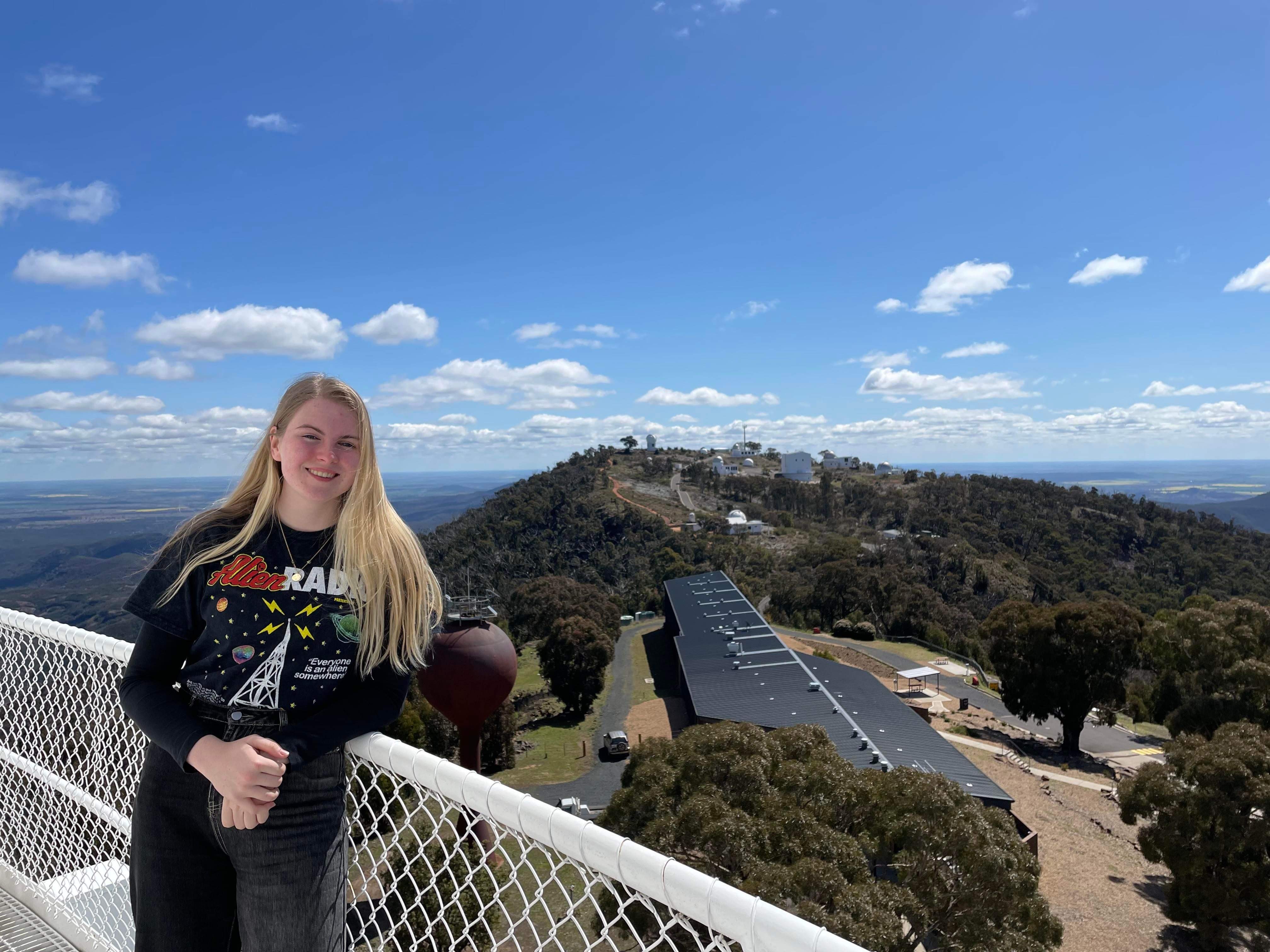
Quasars are among the most luminous objects in the Universe — the brilliant cores of distant galaxies powered by supermassive black holes consuming vast amounts of material. At their most extreme, ultra-luminous quasars challenge our understanding of how big black holes can grow and how fast they can feed.
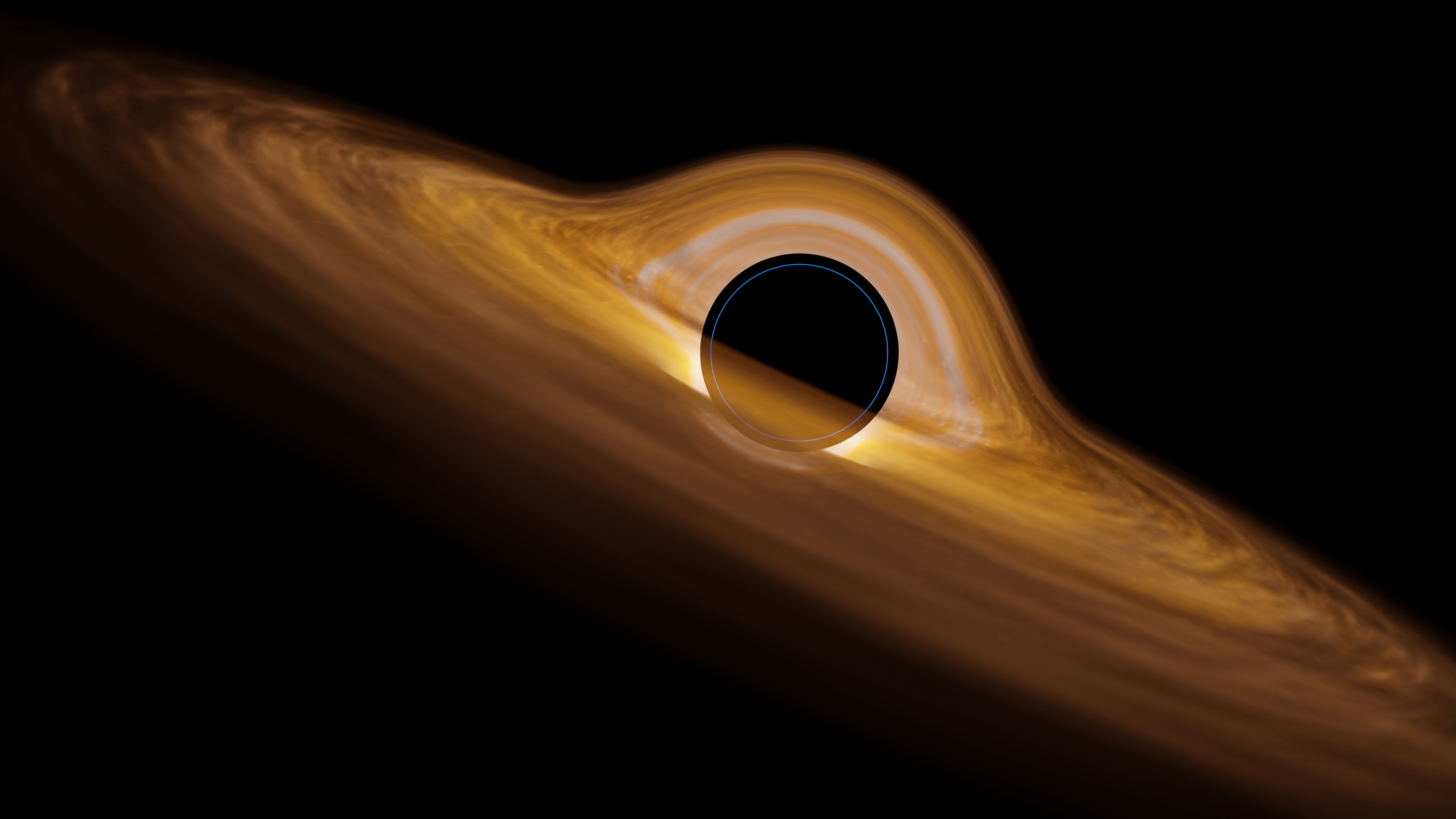
Grace Blomfield examined the spectral properties of high-luminosity quasars and what these reveal about the nature of the accretion disc and the masses of the black holes at their centre. She developed a novel approach to analysing the extreme radiation from the discs of material immediately surrounding supermassive black holes. By accurately modelling the near-infrared emission from ionised iron atoms in these discs for the first time, Grace’s research provides new insights into the physical conditions and geometry of gas flowing onto these growing supermassive black holes.
Her work lays the foundation for the most modern and robust template for understanding the light from quasars exhibiting very high luminosity. This template will inform James Webb Space Telescope (JWST) observations and shape the research direction of many future quasar studies.
Grace Blomfield (ANU) is winner of the Astronomical Society of Australia’s Bok Prize for Outstanding Research by an Honours Student or eligible Masters Student.
[email protected] (Available for interview)
Pictured above, Grace at Siding Springs Observatory, and render of an Active Galactic Nucleus (AGN) credit to Neelesh Amrutha ANU.
Also highly commended: Taaseen Islam (ANU, now Adelaide University), who tackled the mystery of why the Large Magellanic Cloud — a small satellite galaxy of the Milky Way, visible to the naked eye from southern Australia — produces surprisingly few gamma rays. He found that low-density gas in the Milky Way’s outskirts blows like a wind against the smaller galaxy as it falls inwards, stripping away the cosmic rays that would otherwise make it glow at gamma-ray energies.
Ghost galaxies: unravelling the origins of ultra-diffuse galaxies
Ultra-diffuse galaxies (UDGs) are some of the most puzzling objects in the cosmos — with the sizes of giant galaxies but brightness of dwarfs, with some containing far too little dark matter to fit conventional models of galaxy formation. How they came to exist has been an open question.
Dr Maria Luisa Buzzo’s PhD thesis on the origins of ultra-diffuse galaxies resulted in 8 first-author publications in leading journals and 20 influential co-authored papers. Working across an unusually wide range of wavelengths, from ultraviolet (GALEX) to radio (ALMA), she combined photometry, spectroscopy, Bayesian spectral energy distribution fitting, and machine-learning approaches to show that UDGs do not share a single formation mechanism but instead arise from at least two distinct evolutionary pathways.
Luisa presented the first coherent observational picture of how a globular cluster-rich, dark matter-deficient UDG may form — linking an old galaxy, a chain of young massive clusters, and a high-velocity companion in a way that matches the expectations of high-speed encounter scenarios. She also showed that dark matter-deficient dwarf galaxies are not isolated anomalies but represent a genuine and repeatable class, with important implications for our understanding of galaxy–environment interactions.
Dr Maria Luisa Buzzo (Swinburne University, now Yale University) is winner of the Astronomical Society of Australia’s Charlene Heisler Prize for Outstanding PhD Thesis.
[email protected] (Available for interview east coast USA timing)
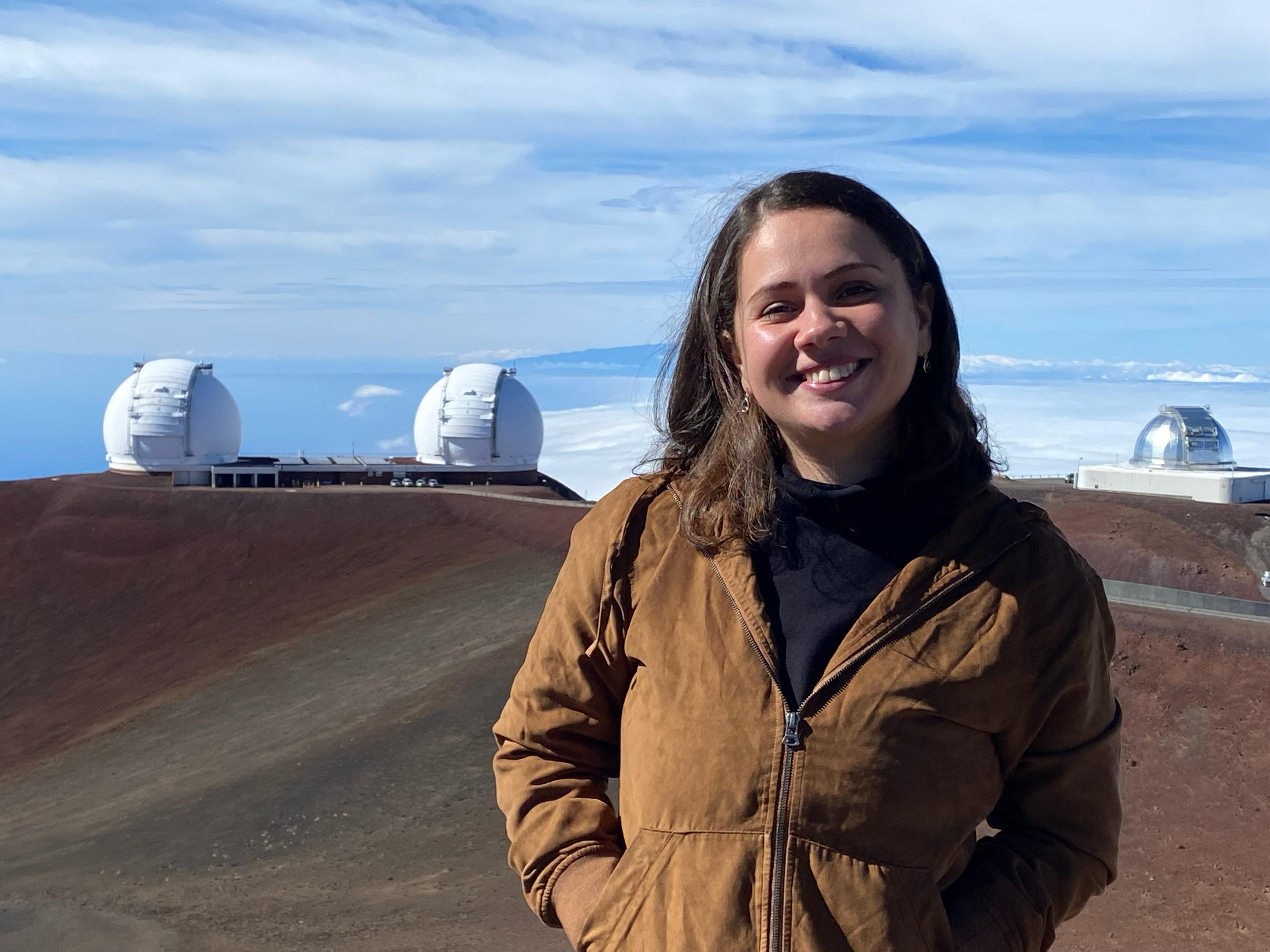
Pictured above, Maria Luisa in front of Keck Telescopes in Hawaii.
Also highly commended: Bailey Sykes (Monash University), whose supercomputer simulations follow the violent final moments of massive stars — revealing how ‘failed’ supernova explosions can give birth to black holes, and how magnetic fields shape both the explosions and the newborn neutron stars they leave behind.
Cosmic mysteries: X-ray flares and the birth of galactic discs
The Louise Webster Prize is awarded this year to two joint winners for research that each addresses a major open question in astronomy.
What are long-period radio transients? — Dr Ziteng (Andy) Wang
Long-period radio transients are a recently discovered and deeply mysterious class of objects that pulse with radio waves on timescales of minutes to hours — far slower than any known pulsar. What generates these pulses, and what kind of object is at their heart, is one of astronomy’s newest and most compelling puzzles.
Dr Ziteng (Andy) Wang detected X-ray emission from a bright long-period radio transient for the first time, placing key constraints on the nature of this mysterious class of objects. This detection represents a major step forward in determining what long-period radio transients are.
Research paper: Detection of X-ray emission from a bright long-period radio transient, Nature 642, 583–586 (2025)
When did galaxies get their discs? — Dr Takafumi Tsukui

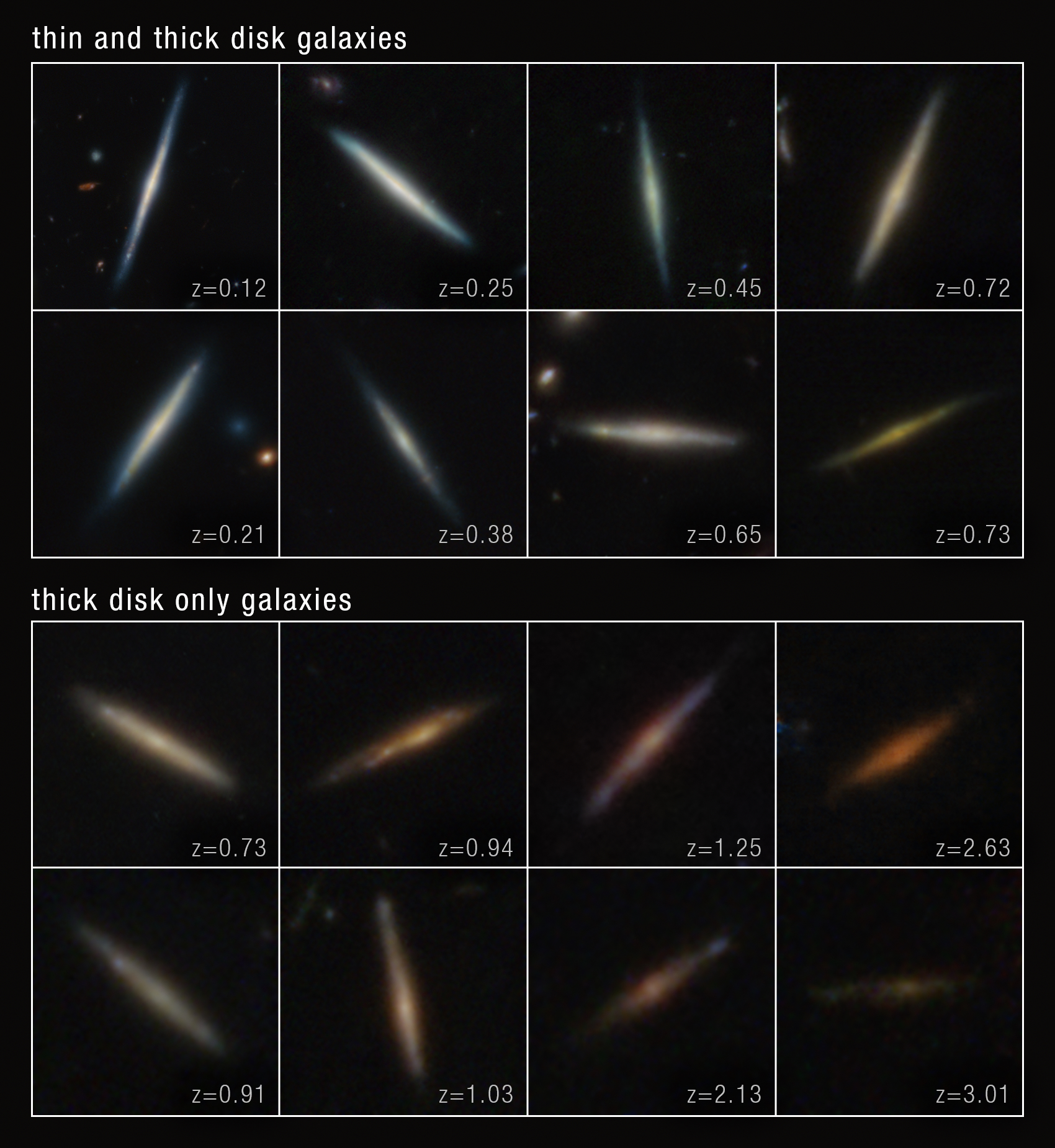
Large disc galaxies, including our Milky Way, have two distinct structural components — a thin disc of younger stars nested within a thicker disc of older ones. When and how this two-layered structure forms have been debated for decades — and until now, it could only be studied in the Milky Way and nearby galaxies, in the present-day Universe.
Dr Takafumi Tsukui used the sharp vision of the James Webb Space Telescope like a time machine, identifying thin and thick discs reaching back 10 billion years and watching how galaxies built their discs across cosmic history. His analysis revealed a clear sequence: in the early Universe most galaxies had a single thick disc, with the thin disc forming later within it.
By adding the time dimension to a question previously studied only in today’s Universe, his work provides a major step toward resolving this decades-old puzzle — and his measurements are already being used to test new theoretical models of how galactic discs form.
Research paper: The emergence of galactic thin and thick discs across cosmic history, MNRAS 540, 3493–3522 (2025)
Dr Ziteng (Andy) Wang (Curtin University) and Dr Takafumi Tsukui (ANU, now Kavli IPMU, Japan) are joint winners of the Astronomical Society of Australia’s Louise Webster Prize for Outstanding Research by a Scientist Early in their Post-Doctoral Career. Each receives the full award.
[email protected] | [email protected]
Pictured above, Takafumi headshot and A Sample of Galaxy Disks: Credit: NASA, ESA, CSA, STScI, Takafumi Tsukui (ANU)
AI eyes on the sky: transforming how astronomers classify cosmic events
Starting this year, the Vera C. Rubin Observatory will scan the southern sky every night, flagging as many as seven million changes — new supernovae, moving asteroids, flaring black holes — far more than any team of astronomers could ever check by eye. Sorting the real discoveries from the noise, in real time, takes machines that can think fast.

Dr Anais Möller is an internationally recognised expert in cosmology and time-domain astronomy. Her leadership of the Fink Broker — an astronomical alert broker that acts as an intermediary between survey telescopes and the scientific community — and her comprehensive work advancing astronomy through algorithm and infrastructure development, is transforming how the field approaches transient classification and cosmological analysis.
Dr Anais Möller (Swinburne University) is winner of the Astronomical Society of Australia’s Anne Green Prize for a Significant Advance or Accomplishment by a Mid-Career Scientist.
[email protected] (Available for interview from 8 July)
Pictured above, Anais spot the difference! to find objects changing brightness in telescopes images we take an image “science” and compare it to an old image “template”, the difference between the two show us what has changed.
Sharpest eyes in space: software that unlocked JWST’s full potential
Australia’s only hardware contribution to the James Webb Space Telescope is the Aperture Masking Interferometer (AMI), an instrument capable of producing some of the sharpest astronomical images ever taken. But when JWST was first commissioned, AMI observers were disappointed: the instrument was not performing as well as expected.
Dr Louis Desdoigts developed ∂Lux, a physical optics simulation package that is fast, differentiable, and deployable to GPU and high-performance computing environments. ∂Lux is the foundation of AMIGO, a data-driven model of the AMI instrument. AMIGO takes a fundamentally different approach to reducing raw JWST data and can deliver optimal performance for AMI — resulting in some of the sharpest images yet taken with JWST, including the volcanoes of Io, dust around the star WR 137, and the core of the active galaxy NGC 1068.
Dr Louis Desdoigts (University of Sydney, now Leiden University) is winner of the Astronomical Society of Australia’s Emerging Leaders in Astronomy Software Development Prize, sponsored by the Australian Research Data Commons (ARDC).
Images
Grace at Siding Springs Observatory and render of an Active Galactic Nucleus (AGN) credit to Neelesh Amrutha ANU.
Maria Luisa in front of Keck Telescopes in Hawaii.
Takafumi headshot and A Sample of Galaxy Disks: Credit: NASA, ESA, CSA, STScI, Takafumi Tsukui (ANU).
Anais spot the difference! To find objects changing brightness in telescopes images we take an image “science” and compare it to an old image “template”, the difference between the two show us what has changed. Credit to Jim Fettes 1_Rubin First Alerts1_00090168.
Photos available as a Dropbox download: https://www.dropbox.com/t/wwuHi5yKrfYrZXdD
Contact details:
The ASA President, Grace, Maria and Anais are available for interviews, contact:
Niall Byrne, 0417-131-977, [email protected]
Jacqui Tyack, 0422-999-088, [email protected]
And visit www.scienceinpublic.com.au.
- Images
-
Download
ASA Awards 2026 media strip.jpg
ASA Awards media strip -
Download
Grace-Siding Springs Observatory.JPG
Grace at Siding Springs Observatory -
Download
AGN Neelesh Amrutha ANU.jpg
Render of an Active Galactic Nucleus (AGN) credit to Neelesh Amrutha ANU. -
Download
Jim Fettes 1_Rubin First Alerts1_00090168.png
Anais spot the difference! to find objects changing brightness in telescopes images we take an image "science" and compare it to an old image "template", the difference between the two show us what has changed. -
Download
NASA, ESA, CSA, STScI, Takafumi Tsukui (ANU).jpg
A Sample of Galaxy Disks: Credit: NASA, ESA, CSA, STScI, Takafumi Tsukui (ANU). -
Download
Maria Lui_sa Buzzo Keck telescopes in Hawaii.jpg
Maria Luisa in front of Keck Telescopes in Hawaii.


