Students with disability missing from SA election debate on education, advocates warn
Children and Young People with Disability Australia (CYDA)

- South Australian political parties criticised for overlooking disability education reforms, despite one in four Australian students requiring disability adjustments
- New South Australia Roadmap to Inclusive Education proposes a 15-year plan for reform, developed through consultation with 719 teachers, families and students
- Consultation findings show 86% of teachers want more disability training, 85% of families want inclusive education, but only 24% of students feel their schools are disability-inclusive
- Despite SA's previous leadership in inclusion, neither major party has committed to comprehensive inclusive education reform ahead of state election
Tens of thousands of students with disability are being overlooked in promised education reforms ahead of the South Australian state election.
That is the warning from Children and Young People with Disability Australia (CYDA) and other advocacy bodies calling on political leaders to outline how they will strengthen inclusive education in the state.
CYDA CEO Skye Kakoschke-Moore said both major parties have so far failed to commit to long-term inclusion, despite one in four students in Australia receiving educational adjustments for a disability.
“Children and young people with disability have the same right to learn, participate and belong at school as their non-disabled peers,” she said.
“Yet their experiences and needs are being treated as an afterthought this election, as though they don’t need to be accounted for when mapping out the future of South Australia’s education system.
“That’s surprising given the state has shown leadership on inclusion in the past by establishing the country’s first Autism Minister and an Autism Inclusion Teachers initiative. With the right commitment, it could lead the nation in inclusive schooling.”
While Labor and the Liberals have each promised some investment in infrastructure and public school fee reduction, neither has committed to broader systemic inclusive education reform.
Yet a clear pathway already exists. Last month, CYDA launched the South Australia Roadmap to Inclusive Education – a staged 15-year plan that outlines practical steps to support inclusive education across the state.
It was developed in consultation with 719 South Australian teachers, families, and students over 12 months.
During this process, CYDA found:
- 86% of teachers wanted more training to support disabled students
- 85% of families wanted their child educated alongside their peers
- Only 24% of students felt their school had a culture inclusive of disability
Ms Kakoschke-Moore said it was clear educators, families, and students agreed more had to be done to support teachers, improve culture, and strengthen inclusive practice.
“Like many states and territories, South Australia is grappling with consistent teacher shortages and burnout,” she said.
“This plan recognises that supporting teachers with tools, training and resourcing also means supporting children and families who just want to be included.
Tracey Wallace, Interim CEO of disability advocacy organisation JFA Purple Orange, which supported the SA Roadmap project, said education is a key issue raised by the disability community.
“Inclusive education benefits everyone. The Disability Royal Commission made that clear when it called for an end to segregated education settings. Yet two years on, we are still waiting to see meaningful action,” she said.
“We’re calling on the incoming South Australian Government to commit to a co-designed inclusive education strategy – one that invests in inclusive practice, builds workforce capability, and stops the creation of new ‘special’ schools or segregated units.”
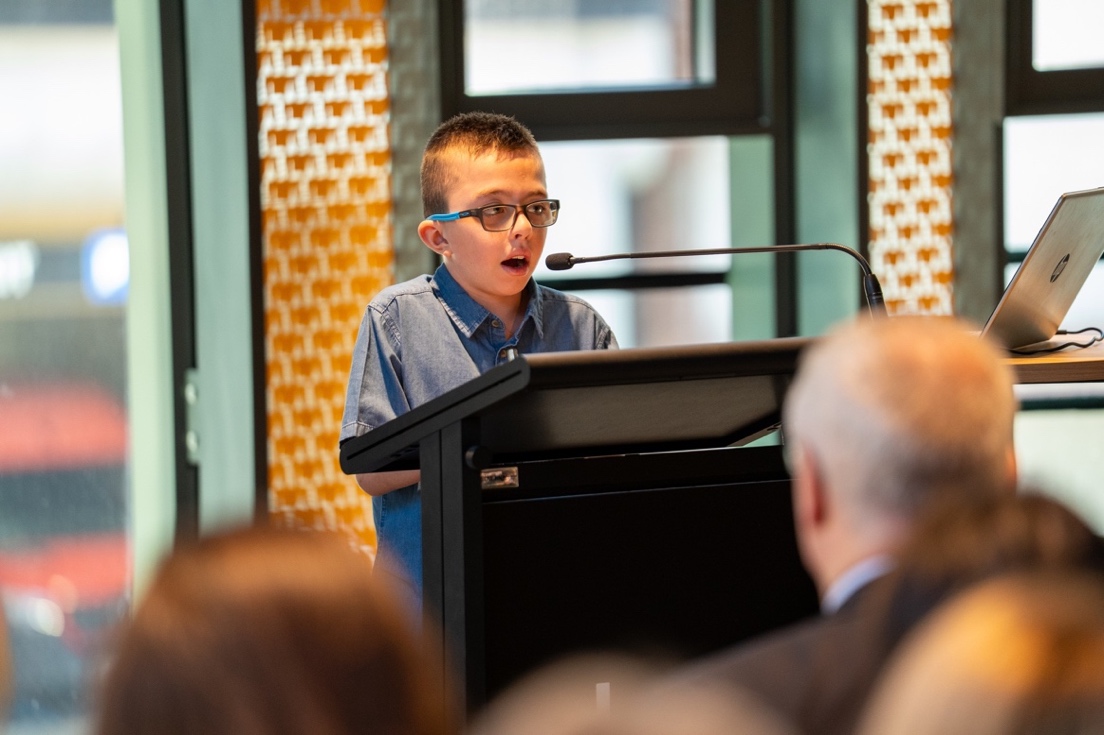
1 Jerzy Ashley speaking at CYDA's launch of the SA Roadmap to Inclusive Education in Adelaide on 5 February, 2026
For ten-year-old Jerzy Ashley from Adelaide, the difference true inclusion at school can make is clear.
Without the support of his arts teacher, the Year 5 student and disability advocate with cerebral palsy may not have discovered his passion for political art.
“Because I have fine motor challenges, art used to be one of my least favourite subjects,” he said at the launch of the SA Roadmap in early February.
“[But when my teacher] introduced me to political comics … she opened up a whole new world for me.
“So while I have faced barriers and challenges and not all of my experiences at school have been inclusive, I have also had teachers and education support officers who have gone above and beyond to make sure that I am included.”
“When inclusion is normal at school, it helps me build the skills, confidence and independence I will need for university and for a career in politics.”
The South Australia state election will take place on Saturday, 21 March.
Read the SA Roadmap to Inclusive Education here.
The following individuals are available for interviews:
- CYDA CEO Skye Kakoschke-Moore
- JFA Purple Orange Interim CEO Tracey Wallace
- Jerzy Ashley and his mother Emma
- Other students, parents, or teachers upon request
 |
|
 |
About us:
CYDA is a not-for-profit community organisation and the peak national body representing the rights and interests of children and young people with disability (aged 0 – 25) in Australia.
Contact details:
Email: [email protected]
Phone: (03) 9417 1025 | Mobile: (+61) 0426 815 627 (David Kavanagh) or 0458 020 197 (Sonia Regan)
- Images
-
Download
Jerzy1.jpg
Jerzy Ashley speaking at CYDA's launch of the SA Roadmap to Inclusive Education in Adelaide on 5 February, 2026
