
Vaccine sparks baby boom in one of Queensland's most diseased koala populations
WWF-Australia

500 koalas vaccinated in 5 years, 75% drop in hospital admissions for chlamydia
In a remarkable turnaround, 41 joeys and 13 grand-joeys have been born in one of Queensland’s most diseased koala populations.
The baby boom among koalas from Elanora on the Gold Coast is thanks to a chlamydia vaccine project led by QUT and Currumbin Wildlife Hospital.
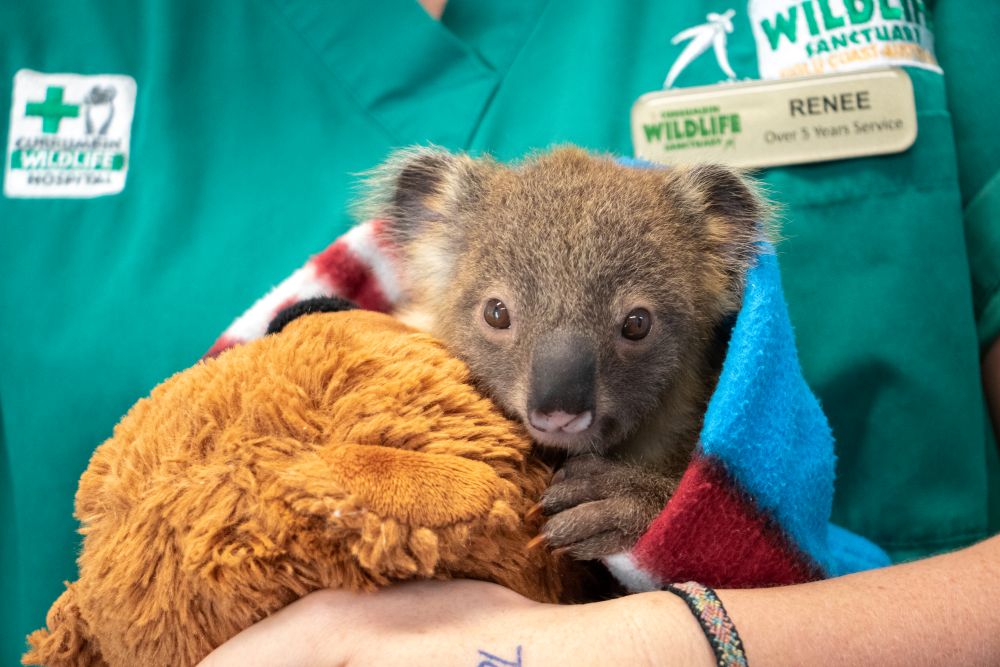
Koala joey Casiope
Currumbin staff recently celebrated vaccinating over 500 koalas in five years.
The World Wide Fund for Nature Australia is collaborating on the vaccine project as part of its aim to double koala numbers by 2050.
Funding support from furniture brand Koala is assisting WWF’s ambitious goal of recovering koala populations.
When the project started in 2020, more than 70% of the Elanora koalas presenting to Currumbin Wildlife Hospital were infected with chlamydia which can cause blindness, severe urinary tract and reproductive disease, infertility and often death.
It was a population in crisis; localised extinction was a very real threat.
More than 30 young adult koalas from the Elanora colony were captured, vaccinated, fitted with a GPS tracker, and then recaptured for health checks every 3-6 months.
In addition, koalas brought to the hospital from the Gold Coast and Northern New South Wales to be treated for a range of issues were also vaccinated
Elanora success
In November, the Currumbin team completed the last check of a koala from Elanora.
Dipity-Doo, daughter of Dip, was healthy, chlamydia-free, and pregnant with what by now should be the 13th Elanora grand-joey.
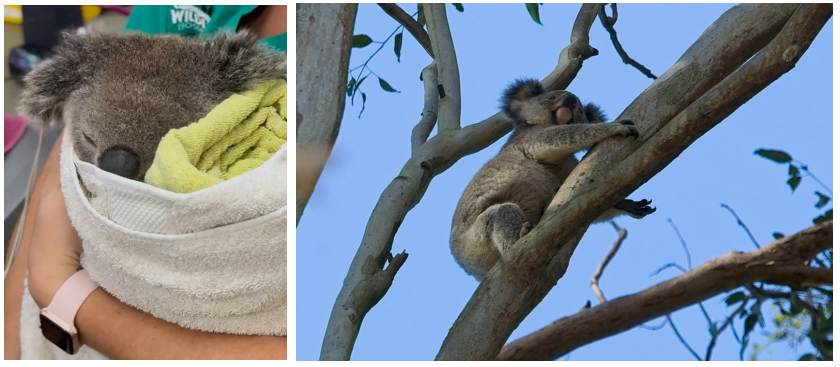
Dipity-Doo health check and as seen in Elanora
The birth of 41 joeys and 13 grand-joeys is compelling evidence the project has been a success.
Vaccinations have helped stabilise the Elanora koalas, transforming a population under severe disease pressure into one showing clear signs of resilience.
Next steps
The current vaccine requires two injections, 30 days apart, which can limit the practicality of vaccinating wild koalas.
Either a koala has to be held for 30 days, or released and recaptured.
QUT researchers have a solution. They are developing a controlled-release vaccine implant. When a koala receives its first vaccination, the biodegradable implant is inserted at the same time and breaks down to deliver the booster dose.
It means a koala only has to be captured once.
The project team is working towards an agreement that will lead to emergency registration of the vaccine with the Australian Pesticides and Veterinary Medicines Authority.
That would pave the way for mass vaccinations of targeted wild koala populations.
Meanwhile, Currumbin Wildlife Hospital has been approved to continue vaccinating rescued koalas brought in for care.
Dr Michael Pyne OAM, Senior Vet at Currumbin Wildlife Hospital said:
Chlamydia is a horrible disease; it’s devastating for koalas. The Elanora population was really struggling. Around 70% of our admissions from Elanora were sick with chlamydia and it was causing massive problems.
Vaccinating these koalas from Elanora over the last 5 years has achieved far more than we could ever have hoped and expected.
Our admissions due to chlamydia from that general area have reduced by 75%.
It gives us hope for the future that through vaccination we can protect against chlamydial disease and we can bear the fruit of all these joeys coming through.
The development of the implant is a critical step. My hope is that the vaccine continues to evolve to the point that it can be used to pull koalas out of being listed as an endangered species.
This work is about more than one population - it’s about developing tools that could help protect koalas across Queensland and beyond.
Dr Freya Russell, from QUT's School of Biomedical Science said:
Over the past 5 years, QUT’s double shot vaccine has been used to vaccinate over 500 koalas in the Currumbin area. In this same area we have seen the incidence of chlamydia through koala hospital admissions drop by over 75%.
But what we’re really excited by is that the number of joeys born to our tracked and vaccinated population is over 50 joeys and grand joeys
Our ultimate goal is to have the vaccine readily available across wildlife rehabilitation centres and hospitals across Australia.
Tanya Pritchard, Senior Manager of Koala Recovery, World Wide Fund for Nature Australia said:
The Elanora koalas have gone from severely diseased to now experiencing a baby boom, it’s remarkable, it’s the feel good story we all need right now. Who doesn’t love a koala baby boom.
These koalas were in crisis, on track to be wiped out. Now they’re much more resilient with a new generation coming through.
To save koalas we need to tackle chlamydia. We need healthy koalas and more habitat. So this is the recipe for getting koalas back from the brink of extinction.
I see a future where we roll out the vaccine at scale among wild koalas. If we catch and vaccinate 10% of the young koalas in a population we can turn things around. That’s exciting for everyone who loves koalas
Pictures of Cassidy and her third joey Casiope here. Credit Currumbin Wildlife Hospital
Other stills and video on request
Contact details:
Mark Symons
Senior Media Officer, WWF-Australia
m 0400 985 571
- Images
-
Download
Cassidy and her third joey Casiope resized.jpg
Cassidy with her third joey Casiope © Currumbin Wildlife Hospital
